Written for Professor Norton McNulty's Feature Writing Class
Fall '09 - SUNY New Paltz
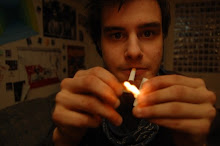
He stays up all night producing hip hop beats on his laptop and spends afternoons playing acoustic guitar and singing with friends. For 24-year-old SUNY New Paltz graduate student Dan Morgenstern, music is a job, a hobby, and an integral part of life.
After earning a bachelor’s degree in contemporary music studies from New Paltz, Morgenstern enrolled in the music therapy master’s program and began cultivating his career. He currently interns at ELANT Health and Housing Solutions in Newburgh performing music therapy with patients suffering from social and behavioral disorders.
Through playing music with friends and using music as a healing tool at work, Morgenstern has developed a unique perspective on the medium.
“What is music? Music is Kool Keith - music is birds and bowling alleys - music is sugar cakes and corn flakes. No… music is sounds - music is essential like blood pumping in your veins. If you look at Kate Moriarty’s art you will see music.”
Morgenstern couples this perspective with professional training in accordance with the American Music Therapy Association’s vision. The association’s website says that music therapy is “an established healthcare profession that uses music to address physical, emotional, cognitive, and social needs of individuals of all ages.”
According to Morgenstern, music therapy can be used in place of or in conjunction with medication.
Both the United States Center for Disease Control and Prevention and the National Institutes of Health recognize music therapy as an accepted treatment for certain neurological conditions.
A National Institute of Mental Health report said that Autism Spectrum Disorders, neural conditions that hinder social interactions and verbal and nonverbal, can be treated by behavioral and communicatory approaches - like music therapy - or with medication like Prozac or Zoloft.
According to the United States Food and Drug Administration, side effects of Prozac include seizures and mania - side effects of Zoloft include nausea, diarrhea, and tremors.
Mary Boyle, chair of the music therapy department at New Paltz said that music therapy is only known to induce positive side-effects.
“Often in therapy we talk about collateral effects, which are positive side effects,” said Boyle. “Music may elevate a client's mood and the client may be able to perform better in several spheres.”
“In my own case music has replaced medication,” Morgenstern added.
At ELANT, Morgenstern helps patients with conditions like Alzheimer’s and dementia with respect to cognition, social interactions, spirituality, emotions and overall quality of life. He said that listening activities for relaxation and active musical participation are beneficial to patients.
One patient, a women with severe dementia developed an uncontrollable tick due to the intense antipsychotics she was prescribed. After working with Morgenstern, she replaced a violent clicking noise with improvisational jazz singing.
“During sessions I would get here to scat sing so she would stop clicking,” he said. “I would start singing to her, she’d join… and it seemed to bring her to a more relaxed state of being.”
Morgenstern has been a musician since he could “bang on the pots” in his mother’s kitchen and is overwhelmed each time he witnesses healing power of music.
“It makes me feel great… like I’m accomplishing something real,” he said.
He currently accepts music as his personal therapeutic catalyst by making hip hop beats and recording rap songs in his cluttered one-room apartment. His floor is scattered with digital drum machines, microphones, effects pedals and wires that lead to seemingly unknown terminals.
Morgenstern described the music he makes as a “waste of time” - however it means the world to him.
When asked to elaborate on his music, he paused and became noticeably pensive.
“I play what I want to hear,” he said. “Hip hop music makes you feel so cool. You can just… dance… and everybody looks cool because there’s music goin’ on in your head. Everybody’s so happy… and crazy.”
Morgenstern did not align his love for music with the health field until college. After he discovered music therapy, Morgenstern began appreciating the growing importance of the discipline as well as its personal benefits.
“[Music therapy] can help anybody from burn victims… to people with autism… to people just recovering from any sort of psychological disorder,” he said. “… I get high off their smiles.”
Morgenstern hopes to someday own a private music therapy practice integrating his love for recording with a newfound desire to help at-risk children.
“I feel like I can utilize hip hop… you know, provide recording time to build self esteem and self-accomplishment,” he said. “It’d be so great to teach kids songs then allow them to record or just write songs with them.”
Morgenstern’s current recording setup is modest to say the least. A Kustom KGA 10 watt guitar amp is fed directly to his Macbook. He also wires three digital delay pedals with a Doctor Rhythm DR 770 drum machine and vocals are run through a Radio Shack dynamic microphone.
Morgenstern’s equipment cost him about $2,000 - he hopes to upgrade in the near future.
At the end of a two hour interview accompanied by background music ranging from contemporary jazz to 80’s hip hop, Morgenstern apprehensively said “Make sure you understand that my favorite thing to do is…” he paused. “My favorite thing to do is walk around and listen to music. It just makes me feel really cool.”
Tuesday, December 15, 2009

Sunday, November 15, 2009
student/pro wrestler
Written for Professor Norton McNulty's Feature Writing Class
Fall '09 - SUNY New Paltz

Dan Barry in his full wrestling gear (photo courtesy of Dan Barry)
In his final semester at SUNY New Paltz, Dan Barry spends the majority of his weeks studying in the library and his weekends falling through tables, getting hit with metal chairs and forcing blood out of his face for the entertainment of others.
Aside from studying TV and radio production at New Paltz and maintaining a 3.8 grade point average, Dan Barry wrestles professionally every weekend for multiple independent leagues throughout the northeast. Unlike Olympic-style wrestling, the winner of a professional wrestling match is fixed, but the pain is very real.
“If I jump off the top rope and land with my back in someone’s chest – there’s no way to fake that – it’s going to hurt,” said Barry.
Over the course of his nine year wrestling career Barry has broken his jaw, had teeth knocked out, broken multiple ribs, dislocated his hip and suffered multiple concussions alongside many more injuries he could not remember.
Barry started wrestling when he was 18-years-old. He grew up watching the WWF (now WWE) and WCW on television and after coming upon extra money he decided to take lessons at a local wrestling school in Hicksville Long Island.
“I always imagined myself as a professional wrestler. I guess I’m that kind of daydreamer,” said Barry. “… So when I had the money I signed up and got my butt kicked.”
The first year was the hardest for Barry. His coach, well-known professional wrestler “Mikey Whipwreck” did everything in his power to try to make Barry quit. Barry believed that if he could make it through the first year of conditioning, learning how to fall and developing a humble perspective, he could make it as a pro wrestler.
According to tag-team partner and longtime friend Ken “Scampi” Burger, Barry has progressed greatly and is a natural at the sport.
“His repertoire of moves has gotten wider and wider over the years,” said Burger. “He is one of the most talented guys I’ve ever worked with.”
Although Barry has years of training, spent countless hours in the gym and developed an understanding of how minimize harm to opponents, wrestling takes a toll on his physical health. The folding chairs wrestlers hit each other with are purchased from office supplies stores and the tables that they fall through are made of particle board.
Like the weapons, blood in wrestling matches is real. “Blading,” as it’s known in the industry, is when a wrestler cuts himself with a hidden razorblade during a match and forces blood to drip from the open wound. Normally hidden under wrist-tape or sweat bands, the razor is kept safely tucked in until the predetermined point in a match when the wrestler discretely cuts his own face.
To make the blood more obvious, Barry prepares before a match by practicing a few industry standard techniques.
“One trick is drinking a few beers before a match, it thins the blood. Some guys take a couple of Asprin too,” Barry said.
He tries his best to keep his wrestling life and his academic life separate, but every weekend he cannot avoid them colliding.
“On a Saturday when I should be working on a project I’m driving to the middle of nowhere Massachusetts to wrestle in a show,” said Barry. “Then I’ll spend Sunday laid up in bed recovering.”
Barry does not wrestle for the money primarily because he only makes about $100 per show. According to ProWrestling.com, an all encompassing informative Web site about the culture of professional wrestling, even some of the most unknown televised wrestlers make over $50,000 per year. Barry wrestles because he loves it and, as Burger explains, wrestling is like a drug.
“The boys call it ‘the itch,’” he said. “Wrestling gets under your skin and you can never really quit.”
Barry’s teacher for example, “Mikey Whipwreck” is now in his late 30’s and is currently scheduled for his fourth retirement match.
Of the four major televised professional leagues, (WWE, ECW, TNA and ROH) there are over 200 professional wrestlers. However, Barry is one of the thousands of up and coming athletes supported by one of the hundreds of independent leagues around the world.
Barry’s form of wrestling is misunderstood by some and written off as “fake” by many. After hearing about what Barry puts himself through every weekend, 21-year-old New Paltz student Melissa Kaiser said that she “could never imagine why anybody would do that to themselves.”
When asked why he still chooses to wrestle considering the toll it takes on his body, Barry explained that regardless of his rationale, people who don’t understand the sport will not believe him.
“If you don’t like pro wrestling, no explanation will ever do. If you like pro wrestling no explanation is ever necessary,” Barry said.
Fall '09 - SUNY New Paltz

Dan Barry in his full wrestling gear (photo courtesy of Dan Barry)
In his final semester at SUNY New Paltz, Dan Barry spends the majority of his weeks studying in the library and his weekends falling through tables, getting hit with metal chairs and forcing blood out of his face for the entertainment of others.
Aside from studying TV and radio production at New Paltz and maintaining a 3.8 grade point average, Dan Barry wrestles professionally every weekend for multiple independent leagues throughout the northeast. Unlike Olympic-style wrestling, the winner of a professional wrestling match is fixed, but the pain is very real.
“If I jump off the top rope and land with my back in someone’s chest – there’s no way to fake that – it’s going to hurt,” said Barry.
Over the course of his nine year wrestling career Barry has broken his jaw, had teeth knocked out, broken multiple ribs, dislocated his hip and suffered multiple concussions alongside many more injuries he could not remember.
Barry started wrestling when he was 18-years-old. He grew up watching the WWF (now WWE) and WCW on television and after coming upon extra money he decided to take lessons at a local wrestling school in Hicksville Long Island.
“I always imagined myself as a professional wrestler. I guess I’m that kind of daydreamer,” said Barry. “… So when I had the money I signed up and got my butt kicked.”
The first year was the hardest for Barry. His coach, well-known professional wrestler “Mikey Whipwreck” did everything in his power to try to make Barry quit. Barry believed that if he could make it through the first year of conditioning, learning how to fall and developing a humble perspective, he could make it as a pro wrestler.
According to tag-team partner and longtime friend Ken “Scampi” Burger, Barry has progressed greatly and is a natural at the sport.
“His repertoire of moves has gotten wider and wider over the years,” said Burger. “He is one of the most talented guys I’ve ever worked with.”
Although Barry has years of training, spent countless hours in the gym and developed an understanding of how minimize harm to opponents, wrestling takes a toll on his physical health. The folding chairs wrestlers hit each other with are purchased from office supplies stores and the tables that they fall through are made of particle board.
Like the weapons, blood in wrestling matches is real. “Blading,” as it’s known in the industry, is when a wrestler cuts himself with a hidden razorblade during a match and forces blood to drip from the open wound. Normally hidden under wrist-tape or sweat bands, the razor is kept safely tucked in until the predetermined point in a match when the wrestler discretely cuts his own face.
To make the blood more obvious, Barry prepares before a match by practicing a few industry standard techniques.
“One trick is drinking a few beers before a match, it thins the blood. Some guys take a couple of Asprin too,” Barry said.
He tries his best to keep his wrestling life and his academic life separate, but every weekend he cannot avoid them colliding.
“On a Saturday when I should be working on a project I’m driving to the middle of nowhere Massachusetts to wrestle in a show,” said Barry. “Then I’ll spend Sunday laid up in bed recovering.”
Barry does not wrestle for the money primarily because he only makes about $100 per show. According to ProWrestling.com, an all encompassing informative Web site about the culture of professional wrestling, even some of the most unknown televised wrestlers make over $50,000 per year. Barry wrestles because he loves it and, as Burger explains, wrestling is like a drug.
“The boys call it ‘the itch,’” he said. “Wrestling gets under your skin and you can never really quit.”
Barry’s teacher for example, “Mikey Whipwreck” is now in his late 30’s and is currently scheduled for his fourth retirement match.
Of the four major televised professional leagues, (WWE, ECW, TNA and ROH) there are over 200 professional wrestlers. However, Barry is one of the thousands of up and coming athletes supported by one of the hundreds of independent leagues around the world.
Barry’s form of wrestling is misunderstood by some and written off as “fake” by many. After hearing about what Barry puts himself through every weekend, 21-year-old New Paltz student Melissa Kaiser said that she “could never imagine why anybody would do that to themselves.”
When asked why he still chooses to wrestle considering the toll it takes on his body, Barry explained that regardless of his rationale, people who don’t understand the sport will not believe him.
“If you don’t like pro wrestling, no explanation will ever do. If you like pro wrestling no explanation is ever necessary,” Barry said.
Tuesday, November 10, 2009
40 Under 40 - for the Poughkeepsie Journal
All articles with headlines that include "for the Pughkeepsie Journal" are unedited. They were put through rounds of editing before going to publication. This is the article as I wrote it.
This article appeared either in print or online - it is now in the Poughkeepsie Journal archives.
The Greater Southern Dutchess Chamber of Commerce will honor 40 professionals for their philanthropy, community service and professional excellent at the fifth annual Forty Under 40 Awards.
Also known as The Shaker Awards, local professionals between the ages of 18 and 40 are nominated until Dec. 31 via the Chamber’s website (http://www.gsdcc.org). Anybody can nominate clients, colleagues and coworkers to be chosen in January and celebrated on Mar. 8 at the Mid-Hudson Civic Center.
Self-nominations are also welcome, said Ann Meagher, President and CEO of the Greater Southern Dutchess Chamber of Commerce.
Forty Under 40 Award winners are chosen from a pool of 80 to 100 entries and judged on three criteria: career accomplishments, professional expertise and community involvement. The judging committee, made up of past Forty Under 40 winners, also considers any unique aspects that might make nominees stand out.
“It would be a mistake if we tried to put people into really rigid packages because people aren’t like that,” said Meagher. “We’re really looking for the full package of leadership.”
Past winners are chosen to judge the competition due to the diversity of professions and backgrounds of nominees. According to Meagher, nominees range in professions from small business owners to accountants to firefighters.
According to a press release, the ultimate goal of this award is to “recognize business people under the age of 40 who balance bottom line results with a desire to participate in charitable and community activities.”
Meagher said “anyone under the age of 40 who has done incredible things in their community” is eligible for the Forty Under 40 Awards.
This article appeared either in print or online - it is now in the Poughkeepsie Journal archives.
The Greater Southern Dutchess Chamber of Commerce will honor 40 professionals for their philanthropy, community service and professional excellent at the fifth annual Forty Under 40 Awards.
Also known as The Shaker Awards, local professionals between the ages of 18 and 40 are nominated until Dec. 31 via the Chamber’s website (http://www.gsdcc.org). Anybody can nominate clients, colleagues and coworkers to be chosen in January and celebrated on Mar. 8 at the Mid-Hudson Civic Center.
Self-nominations are also welcome, said Ann Meagher, President and CEO of the Greater Southern Dutchess Chamber of Commerce.
Forty Under 40 Award winners are chosen from a pool of 80 to 100 entries and judged on three criteria: career accomplishments, professional expertise and community involvement. The judging committee, made up of past Forty Under 40 winners, also considers any unique aspects that might make nominees stand out.
“It would be a mistake if we tried to put people into really rigid packages because people aren’t like that,” said Meagher. “We’re really looking for the full package of leadership.”
Past winners are chosen to judge the competition due to the diversity of professions and backgrounds of nominees. According to Meagher, nominees range in professions from small business owners to accountants to firefighters.
According to a press release, the ultimate goal of this award is to “recognize business people under the age of 40 who balance bottom line results with a desire to participate in charitable and community activities.”
Meagher said “anyone under the age of 40 who has done incredible things in their community” is eligible for the Forty Under 40 Awards.
New Paltz Celebration of the Arts - for the Pougkeepsie Journal
All articles with headlines that include "for the Pughkeepsie Journal" are unedited. They were put through rounds of editing before going to publication. This is the article as I wrote it.
This article appeared either in print or online - it is now in the Poughkeepsie Journal archives.
The word “Art” encompasses more than just drawing and painting, and this fact is recognized and celebrated annually at The Celebration of the Arts (COTA) festival in New Paltz.
Amongst stone houses dating back to the colonization of America, historic Huguenot Street is this year’s venue for hundreds of fine artists, musicians, theater groups, authors, poets, silent auctions, food venders, and children’s activities on Oct. 10.
Alongside the founding of the primary ideology of the festival, the first COTA was produced three years ago by then 15-year-old Noelle Mc Entee at nearby Hasbrouck Park. The initial goal was to celebrate artists of all disciplines and stages in their careers. COTA is currently pursuing, and does not intend on changing that mission.
Although the idea of showcasing a myriad of artists is the predominant theme, artists will also enjoy sharing and networking with each other. According to COTA’s fine art coordinator Melanie Cronin, the networking aspect is important to participating artists.
“Having artists of different skill levels together on one day might lead to meeting someone you never would have, which leads to the next opportunity… artists [have] ended up in galleries due to participation in this,” said Cronin.
Participants as well as guests are encouraged to talk and mingle with neighbors and the eclectic spectrum of talent.
Illustrative painter Eileen Brand Hedley holds the social aspect of COTA as most exciting.
“[COTA] is a good way to check out other peoples’ work… I get inspired,” she said.
The diverse range of exhibitions will forge a unique experience with respect to many different artistic genres. Although paints and canvases are prominent, performances from East Indian dancers, rock and rollers, jazz ensembles, Mexican “folkloric dancers,” and many more will be featured.
The main attraction is Oct. 10, however the festivities have already begun with an attraction called “COTA Corridors.” Throughout the month of September and until Oct. 10, art installations are hung in windows of businesses throughout downtown New Paltz. This gives community members an idea of what to expect should they attend the COTA festival.
SUNY New Paltz Art Education major Karissa Gropper has noticed part of COTA Corridors at a local pizzeria and is now excited about the event. She recognized some artists’ names as former New Paltz students and wondered if her future could be similar.
“I found it interesting to see some people who have gone through the same program and the same process as I’m going through,” said Gropper. “It’s cool to see what kind of art is going on in my own area… I would love to be part of this festival at some point.”
Gropper also noted that this event could have more of an impact on local residents if the school were involved. She was surprised that not one professor told her about the event. Promotional fliers and posters on campus, to her knowledge, were non-existent.
However, Gropper remains confident that the event will be a learning experience for those who attend.
“I like that anyone can apply to be in it…” said Gropper. “There’s going to be a lot of variety.”
COTA is a multifaceted event for the enjoyment of all age groups and interests. Cronin was unable to pinpoint her favorite aspect of the festival.
“The entire event I think really presents well as a whole,” said Cronin. “There isn’t a piece that surpasses the other.”
This article appeared either in print or online - it is now in the Poughkeepsie Journal archives.
The word “Art” encompasses more than just drawing and painting, and this fact is recognized and celebrated annually at The Celebration of the Arts (COTA) festival in New Paltz.
Amongst stone houses dating back to the colonization of America, historic Huguenot Street is this year’s venue for hundreds of fine artists, musicians, theater groups, authors, poets, silent auctions, food venders, and children’s activities on Oct. 10.
Alongside the founding of the primary ideology of the festival, the first COTA was produced three years ago by then 15-year-old Noelle Mc Entee at nearby Hasbrouck Park. The initial goal was to celebrate artists of all disciplines and stages in their careers. COTA is currently pursuing, and does not intend on changing that mission.
Although the idea of showcasing a myriad of artists is the predominant theme, artists will also enjoy sharing and networking with each other. According to COTA’s fine art coordinator Melanie Cronin, the networking aspect is important to participating artists.
“Having artists of different skill levels together on one day might lead to meeting someone you never would have, which leads to the next opportunity… artists [have] ended up in galleries due to participation in this,” said Cronin.
Participants as well as guests are encouraged to talk and mingle with neighbors and the eclectic spectrum of talent.
Illustrative painter Eileen Brand Hedley holds the social aspect of COTA as most exciting.
“[COTA] is a good way to check out other peoples’ work… I get inspired,” she said.
The diverse range of exhibitions will forge a unique experience with respect to many different artistic genres. Although paints and canvases are prominent, performances from East Indian dancers, rock and rollers, jazz ensembles, Mexican “folkloric dancers,” and many more will be featured.
The main attraction is Oct. 10, however the festivities have already begun with an attraction called “COTA Corridors.” Throughout the month of September and until Oct. 10, art installations are hung in windows of businesses throughout downtown New Paltz. This gives community members an idea of what to expect should they attend the COTA festival.
SUNY New Paltz Art Education major Karissa Gropper has noticed part of COTA Corridors at a local pizzeria and is now excited about the event. She recognized some artists’ names as former New Paltz students and wondered if her future could be similar.
“I found it interesting to see some people who have gone through the same program and the same process as I’m going through,” said Gropper. “It’s cool to see what kind of art is going on in my own area… I would love to be part of this festival at some point.”
Gropper also noted that this event could have more of an impact on local residents if the school were involved. She was surprised that not one professor told her about the event. Promotional fliers and posters on campus, to her knowledge, were non-existent.
However, Gropper remains confident that the event will be a learning experience for those who attend.
“I like that anyone can apply to be in it…” said Gropper. “There’s going to be a lot of variety.”
COTA is a multifaceted event for the enjoyment of all age groups and interests. Cronin was unable to pinpoint her favorite aspect of the festival.
“The entire event I think really presents well as a whole,” said Cronin. “There isn’t a piece that surpasses the other.”
Disability Mentoring Day - for the Poughkeepsie Journal
All articles with headlines that include "for the Pughkeepsie Journal" are unedited. They were put through rounds of editing before going to publication. This is the article as I wrote it.
This article appeared either in print or online - it is now in the Poughkeepsie Journal archives.
Disability Mentoring Day (DMD) was celebrated by Highland and Marlboro school districts with a three-day event schedule geared toward helping disabled individuals find niches within modern work environments.
Sponsored by the American Association for People with Disabilities (AAPD), DMD is celebrated annually on the third Wednesday in October. This year, Darden Restaurants and Dutchess County Outreach collectively sponsored mentoring events on Oct. 19, 20 and 22.
Students from Highland and Marlboro school districts attended job-shadowing events, etiquette presentations and lunch at Darden Restaurants’ Red Lobster and Olive Garden in Poughkeepsie on Oct. 19 and 20.
Students Nick Hoskins and Ann Marie Cusack observed the daily routines of chefs as well as participated in hands-on activities. According to Michael Milliman, Transition Coordinator for Highland and Marlboro school districts, students were excited about finding a possible career as well as simply being at a restaurant.
“Some of them had never gone out to dinner at a restaurant before,” said Milliman. “For them it was something that they had been looking forward to for weeks.”
Mentoring is the gateway to independence for people with disabilities in terms of forgoing reliance on public benefits and finding work, said David Hale, Program Manager for the AAPD.
DMD also helps people with disabilities become more comfortable in their own communities with respect to social interactions and becoming comfortable in work environments.
Many of the Highland and Marlboro students have social anxieties, said Milliman. This program is “making them more well-rounded people just in their daily living.”
The Oct. 22 visit to Dutchess County Outreach was based entirely on community. Disabled students spent the day at the Lunch Box food bank in Poughkeepsie serving meals to the homeless in hopes of bringing a sense of community awareness to students as well as aiding the local homeless.
Similar to its impact on students, DMD can have advantageous implications for employers who may not know much about the disabled community.
“Job seekers are learning skills and the mentors themselves are learning about disabilities which helps change the culture in a workplace to be more accepting and understanding of workers with disabilities,” said Hale.
In Milliman’s opinion, this year’s participants had a great time and the events were successful. Hoskins and Cusack both “came away with a heightened interest in being a chef,” Milliman said.
DMD is an introductory program designed for job seekers to gain preliminary experience and build their resumes. As Hale explained, anybody is welcome to participate.
“That’s the magical thing about mentoring,” he said. “No matter how old or professionally developed you are, people still need mentors in their lives to sort of make the most of their own career.”
According to AAPD’s website, DMD connects nearly 20,000 job seekers with thousands of employers in every U.S. state and territory and in more than 24 countries worldwide each year.
“If you want to work and you self-identify as a person with a disability – welcome to our program,” said Hale.
This article appeared either in print or online - it is now in the Poughkeepsie Journal archives.
Disability Mentoring Day (DMD) was celebrated by Highland and Marlboro school districts with a three-day event schedule geared toward helping disabled individuals find niches within modern work environments.
Sponsored by the American Association for People with Disabilities (AAPD), DMD is celebrated annually on the third Wednesday in October. This year, Darden Restaurants and Dutchess County Outreach collectively sponsored mentoring events on Oct. 19, 20 and 22.
Students from Highland and Marlboro school districts attended job-shadowing events, etiquette presentations and lunch at Darden Restaurants’ Red Lobster and Olive Garden in Poughkeepsie on Oct. 19 and 20.
Students Nick Hoskins and Ann Marie Cusack observed the daily routines of chefs as well as participated in hands-on activities. According to Michael Milliman, Transition Coordinator for Highland and Marlboro school districts, students were excited about finding a possible career as well as simply being at a restaurant.
“Some of them had never gone out to dinner at a restaurant before,” said Milliman. “For them it was something that they had been looking forward to for weeks.”
Mentoring is the gateway to independence for people with disabilities in terms of forgoing reliance on public benefits and finding work, said David Hale, Program Manager for the AAPD.
DMD also helps people with disabilities become more comfortable in their own communities with respect to social interactions and becoming comfortable in work environments.
Many of the Highland and Marlboro students have social anxieties, said Milliman. This program is “making them more well-rounded people just in their daily living.”
The Oct. 22 visit to Dutchess County Outreach was based entirely on community. Disabled students spent the day at the Lunch Box food bank in Poughkeepsie serving meals to the homeless in hopes of bringing a sense of community awareness to students as well as aiding the local homeless.
Similar to its impact on students, DMD can have advantageous implications for employers who may not know much about the disabled community.
“Job seekers are learning skills and the mentors themselves are learning about disabilities which helps change the culture in a workplace to be more accepting and understanding of workers with disabilities,” said Hale.
In Milliman’s opinion, this year’s participants had a great time and the events were successful. Hoskins and Cusack both “came away with a heightened interest in being a chef,” Milliman said.
DMD is an introductory program designed for job seekers to gain preliminary experience and build their resumes. As Hale explained, anybody is welcome to participate.
“That’s the magical thing about mentoring,” he said. “No matter how old or professionally developed you are, people still need mentors in their lives to sort of make the most of their own career.”
According to AAPD’s website, DMD connects nearly 20,000 job seekers with thousands of employers in every U.S. state and territory and in more than 24 countries worldwide each year.
“If you want to work and you self-identify as a person with a disability – welcome to our program,” said Hale.
David Haines magic - for the Poughkeepsie Journal
All articles with headlines that include "for the Pughkeepsie Journal" are unedited. They were put through rounds of editing before going to publication. This is the article as I wrote it.
This article appeared either in print or online - it is now in the Poughkeepsie Journal archives.
Magician David Haines has been showcasing his Las Vegas style illusions across the globe from casinos to cruise ships, from Hollywood to British Columbia since 1990.
On Saturday Oct. 17, Haines will stage a grandiose “illusion spectacular” at the Mid-Hudson Civic Center. Born and raised in Poughkeepsie, this is the first time in 10 years that Haines will perform in his home town and he plans on making it an unforgettable evening.
Haines found magic at the age of eight and has never looked back. As an up and coming magician, he joined the Poughkeepsie chapter (Assembly #35) of the national organization, the Society of American Magicians. As a member, Haines took an oath of respect, fellowship, and commitment to the elevation of the art of magic.
According to the dean of the Society of American Magicians, George Schindler, members of local branches, or “assemblies” are assured camaraderie and a constant stream of idea sharing within local magic communities.
Since cultivating his career locally and internationally, Haines has forged a style based on gaudy performances akin to Las Vegas-style magic productions. Despite the magnitude of his show, Haines maintains fluidity and confidence.
“His style is very smooth, pleasant, and entertaining… [His act] flows very smoothly from one trick to the next,” said Ed Fitchett, a member of the Society of American Magicians – Assembly #35 – since 1942. Fitchett has watched Haines evolve as a magician and is excited about his upcoming gig.
“I’m looking forward to it,” he said. “I’ve got tickets right in the front row.”
According to Haines, the Dutchess County area has never seen anything like the show he is planning. Amongst family, friends, and strangers, Haines wants to “bring Hollywood and Vegas to Dutchess County” through the integration of elaborate sets, large-scale illusions and flashy presentation.
Due to the size and sophistication of this production, teams have spent eight months preparing for the show and will take three full days to set up the venue. According to Haines, the technical aspects of his performance must be executed with precision.
“If the finest details are not in place, there could be serious safety issues,” said Haines.
Haines’s attention to detail, according to Assembly #35’s current president Derrin Berger implies a certain amount of professionalism.
“A lot of time, work and effort go into what he’s doing – it shows,” said Berger. “He cares about what he does. Everything is always very professional.”
This professionalism will become apparent in illusions including, but not limited to: people appearing, disappearing, floating in air, cut in half, close-up magic, comedy, mentalism, a concert-style sound system, intricate lighting fixtures, elaborate backdrops, searchlights beaming miles into the sky outside the entrance, and plenty of audience participation.
Haines holds crowd interactivity as an integral part of his act.
“No matter where in the world I perform, I would just like to entertain,” said Haines “… to know [the audience] can smile and enjoy is magic for me.”
When asked if he was preparing anything special for his homecoming performance, Haines replied simply: “Yes.”
This article appeared either in print or online - it is now in the Poughkeepsie Journal archives.
Magician David Haines has been showcasing his Las Vegas style illusions across the globe from casinos to cruise ships, from Hollywood to British Columbia since 1990.
On Saturday Oct. 17, Haines will stage a grandiose “illusion spectacular” at the Mid-Hudson Civic Center. Born and raised in Poughkeepsie, this is the first time in 10 years that Haines will perform in his home town and he plans on making it an unforgettable evening.
Haines found magic at the age of eight and has never looked back. As an up and coming magician, he joined the Poughkeepsie chapter (Assembly #35) of the national organization, the Society of American Magicians. As a member, Haines took an oath of respect, fellowship, and commitment to the elevation of the art of magic.
According to the dean of the Society of American Magicians, George Schindler, members of local branches, or “assemblies” are assured camaraderie and a constant stream of idea sharing within local magic communities.
Since cultivating his career locally and internationally, Haines has forged a style based on gaudy performances akin to Las Vegas-style magic productions. Despite the magnitude of his show, Haines maintains fluidity and confidence.
“His style is very smooth, pleasant, and entertaining… [His act] flows very smoothly from one trick to the next,” said Ed Fitchett, a member of the Society of American Magicians – Assembly #35 – since 1942. Fitchett has watched Haines evolve as a magician and is excited about his upcoming gig.
“I’m looking forward to it,” he said. “I’ve got tickets right in the front row.”
According to Haines, the Dutchess County area has never seen anything like the show he is planning. Amongst family, friends, and strangers, Haines wants to “bring Hollywood and Vegas to Dutchess County” through the integration of elaborate sets, large-scale illusions and flashy presentation.
Due to the size and sophistication of this production, teams have spent eight months preparing for the show and will take three full days to set up the venue. According to Haines, the technical aspects of his performance must be executed with precision.
“If the finest details are not in place, there could be serious safety issues,” said Haines.
Haines’s attention to detail, according to Assembly #35’s current president Derrin Berger implies a certain amount of professionalism.
“A lot of time, work and effort go into what he’s doing – it shows,” said Berger. “He cares about what he does. Everything is always very professional.”
This professionalism will become apparent in illusions including, but not limited to: people appearing, disappearing, floating in air, cut in half, close-up magic, comedy, mentalism, a concert-style sound system, intricate lighting fixtures, elaborate backdrops, searchlights beaming miles into the sky outside the entrance, and plenty of audience participation.
Haines holds crowd interactivity as an integral part of his act.
“No matter where in the world I perform, I would just like to entertain,” said Haines “… to know [the audience] can smile and enjoy is magic for me.”
When asked if he was preparing anything special for his homecoming performance, Haines replied simply: “Yes.”
Make a Difference Day '09 and Follow-Up - for the Poughkeepsie Journal
All articles with headlines that include "for the Pughkeepsie Journal" are unedited. They were put through rounds of editing before going to publication. This is the article as I wrote it.
This article appeared either in print or online - it is now in the Poughkeepsie Journal archives.
Make A Difference Day
Make a Difference Day, the most encompassing volunteer day in America, endorses community service from individuals and organizations across the country.
The State University of New Paltz is among the organizations that will be servicing local communities on October 24 as they have for the past six years.
The annual event is sponsored by USA Weekend and according to their Website; 3 million volunteers participated in 2008.
Last year, students and staff at SUNY New Paltz collected food for Meals on Wheels, organized a crafting project for senior citizens and offered a free concert featuring student musical groups from a capella to jazz.
“Overall, we were very happy with our participation and out ability to do what we were able to achieve,” said Michael Patterson, director of student activities and union services at SUNY New Paltz. “We had a lot of participation… and students had a great time.”
This year, Patterson and SUNY New Paltz are planning a number of volunteer activities for students. Among them are a collection campaign leading up to Make A Difference Day and community service activities on the day of the event.
One group of students will be helping the Family of New Paltz stock food in their pantry while another group will be at the New Paltz Youth Center setting up a haunted house.
While Patterson is confident that the students’ collective efforts will do a great deal for the local community, he also hopes that this will not be the last time students participate in volunteer activities.
“Our hope is that we’re making connections for students so that they have an opportunity to go back again,” said Patterson.
Junior at SUNY New Paltz, Christ Thurston is optimistic about this year’s endeavors.
“All of the activities we have planned are going to increase the sense of community amongst our volunteers and provide a great service to the surrounding community,” said Thurston.
Patterson chooses to have the college participate in Make a Difference Day because he believes both students and community members alike will benefit from the experience.
“We think it’s a great opportunity for students to get involved in service,” said Patterson. “It’s a good way to send a message of being a good neighbor in terms of giving back...”
SUNY New Paltz is among the organizations that will notify USA Weekend of their participation on Make A Difference Day. Ten groups, organizations, or individuals will be selected as national honorees and will be featured in the April 2009 edition of USA Weekend.
Alongside the honorable mention, Newman’s Own will donate $10,000 to each of the 10 honorees’ favorite charities.
Volunteer services can be anything from collecting food for a local pantry to rebuilding natural disaster-effected buildings and homes. According to USA Weekend’s Website, being a part of Make A Difference day is inherently simple:
“If you want to participate, just help someone else on the next Make A Difference Day, Saturday, October 24, 2009.”
Make A Difference Day Follow-UP
Communities across the Hudson Valley are preparing for Make a Difference Day, USA Weekend magazine’s national volunteer day.
Individuals and organizations from Mahopac, Newburgh, Rosendale, and Stanfordville are among the communities planning volunteer activities this Saturday, Oct. 24.
According to USA Weekend’s Web site, volunteer projects can range from “collecting truckloads of clothing for the homeless, or… spending an afternoon helping an elderly neighbor or relative.”
Mahopac Central School District in Putnam County will host basketball games, activities and clinics for children of Green Chimneys. The Brewster-based organization is geared toward restoring possibilities for “children with emotional, behavioral, social and learning challenges.” Forty children from Green Chimneys will convene at Mahopac Middle School at 8:30 a.m. for a day of basketball-focused fun.
Sheila Diasparra, Secretary of the Mahopac Athletic Department and organizer of the Make a Difference Day project, maintains that making a difference does not have to be a large production.
“It’s very easy to make a difference,” she said. “It doesn’t take a whole lot of effort to do something tremendous.”
Like Mahopac school district, M, Clifford Miller School in Ulster County and Middle Hope Elementary School in Orange County have plans to give back to local communities.
At M, Clifford Miller School students will create “Art Bags” in the style of artist, Keith Haring. With donations from a local grocery store, students will paint paper bags with respect the portrayal of good deeds ways in which people can make a difference. Bags are then distributed to community members in hopes of facilitating public awareness and civic pride.
Middle Hope Elementary will involve kindergarten through second grade students in visiting a local hospital and animal shelters. Children will make cards and bring doughnuts and cookies to hospitalized veterans as well as collecting canned food to bring to a local animal shelter.
Although schools provide an outlet for volunteer involvement, individuals can also donate their time and effort toward improving community health. Barbara Carson, lifetime Dutchess County resident organized the Hunn’s Lake Food Pantry Run in Stanfordville with support from the Mid-Hudson Road Runners Club, a Lagrangeville “non-profit organization dedicated to supporting running and racing in the Mid-Hudson Valley.”
Participants must donate a bag of non-perishable groceries to be given to local food pantries. This is the second year that Carson is organizing this event in attempt to give back to the community that helped during her time of need.
“It was a struggle between money for child care and bills. I worked 3 jobs and just couldn’t cut it,” she said. “It just feels good to help people when I’ve bee in that position.”
Non-perishable food donations will also be accepted at Fishkill Town Hall, Hopewell Hose Fire House, Stanfordville Town Hall, or directly through Carson.
According to Carson, giving back to the community “just feels like the right thing to do.”
This article appeared either in print or online - it is now in the Poughkeepsie Journal archives.
Make A Difference Day
Make a Difference Day, the most encompassing volunteer day in America, endorses community service from individuals and organizations across the country.
The State University of New Paltz is among the organizations that will be servicing local communities on October 24 as they have for the past six years.
The annual event is sponsored by USA Weekend and according to their Website; 3 million volunteers participated in 2008.
Last year, students and staff at SUNY New Paltz collected food for Meals on Wheels, organized a crafting project for senior citizens and offered a free concert featuring student musical groups from a capella to jazz.
“Overall, we were very happy with our participation and out ability to do what we were able to achieve,” said Michael Patterson, director of student activities and union services at SUNY New Paltz. “We had a lot of participation… and students had a great time.”
This year, Patterson and SUNY New Paltz are planning a number of volunteer activities for students. Among them are a collection campaign leading up to Make A Difference Day and community service activities on the day of the event.
One group of students will be helping the Family of New Paltz stock food in their pantry while another group will be at the New Paltz Youth Center setting up a haunted house.
While Patterson is confident that the students’ collective efforts will do a great deal for the local community, he also hopes that this will not be the last time students participate in volunteer activities.
“Our hope is that we’re making connections for students so that they have an opportunity to go back again,” said Patterson.
Junior at SUNY New Paltz, Christ Thurston is optimistic about this year’s endeavors.
“All of the activities we have planned are going to increase the sense of community amongst our volunteers and provide a great service to the surrounding community,” said Thurston.
Patterson chooses to have the college participate in Make a Difference Day because he believes both students and community members alike will benefit from the experience.
“We think it’s a great opportunity for students to get involved in service,” said Patterson. “It’s a good way to send a message of being a good neighbor in terms of giving back...”
SUNY New Paltz is among the organizations that will notify USA Weekend of their participation on Make A Difference Day. Ten groups, organizations, or individuals will be selected as national honorees and will be featured in the April 2009 edition of USA Weekend.
Alongside the honorable mention, Newman’s Own will donate $10,000 to each of the 10 honorees’ favorite charities.
Volunteer services can be anything from collecting food for a local pantry to rebuilding natural disaster-effected buildings and homes. According to USA Weekend’s Website, being a part of Make A Difference day is inherently simple:
“If you want to participate, just help someone else on the next Make A Difference Day, Saturday, October 24, 2009.”
Make A Difference Day Follow-UP
Communities across the Hudson Valley are preparing for Make a Difference Day, USA Weekend magazine’s national volunteer day.
Individuals and organizations from Mahopac, Newburgh, Rosendale, and Stanfordville are among the communities planning volunteer activities this Saturday, Oct. 24.
According to USA Weekend’s Web site, volunteer projects can range from “collecting truckloads of clothing for the homeless, or… spending an afternoon helping an elderly neighbor or relative.”
Mahopac Central School District in Putnam County will host basketball games, activities and clinics for children of Green Chimneys. The Brewster-based organization is geared toward restoring possibilities for “children with emotional, behavioral, social and learning challenges.” Forty children from Green Chimneys will convene at Mahopac Middle School at 8:30 a.m. for a day of basketball-focused fun.
Sheila Diasparra, Secretary of the Mahopac Athletic Department and organizer of the Make a Difference Day project, maintains that making a difference does not have to be a large production.
“It’s very easy to make a difference,” she said. “It doesn’t take a whole lot of effort to do something tremendous.”
Like Mahopac school district, M, Clifford Miller School in Ulster County and Middle Hope Elementary School in Orange County have plans to give back to local communities.
At M, Clifford Miller School students will create “Art Bags” in the style of artist, Keith Haring. With donations from a local grocery store, students will paint paper bags with respect the portrayal of good deeds ways in which people can make a difference. Bags are then distributed to community members in hopes of facilitating public awareness and civic pride.
Middle Hope Elementary will involve kindergarten through second grade students in visiting a local hospital and animal shelters. Children will make cards and bring doughnuts and cookies to hospitalized veterans as well as collecting canned food to bring to a local animal shelter.
Although schools provide an outlet for volunteer involvement, individuals can also donate their time and effort toward improving community health. Barbara Carson, lifetime Dutchess County resident organized the Hunn’s Lake Food Pantry Run in Stanfordville with support from the Mid-Hudson Road Runners Club, a Lagrangeville “non-profit organization dedicated to supporting running and racing in the Mid-Hudson Valley.”
Participants must donate a bag of non-perishable groceries to be given to local food pantries. This is the second year that Carson is organizing this event in attempt to give back to the community that helped during her time of need.
“It was a struggle between money for child care and bills. I worked 3 jobs and just couldn’t cut it,” she said. “It just feels good to help people when I’ve bee in that position.”
Non-perishable food donations will also be accepted at Fishkill Town Hall, Hopewell Hose Fire House, Stanfordville Town Hall, or directly through Carson.
According to Carson, giving back to the community “just feels like the right thing to do.”
Subscribe to:
Posts (Atom)